How it may complement Osteopathic treatment
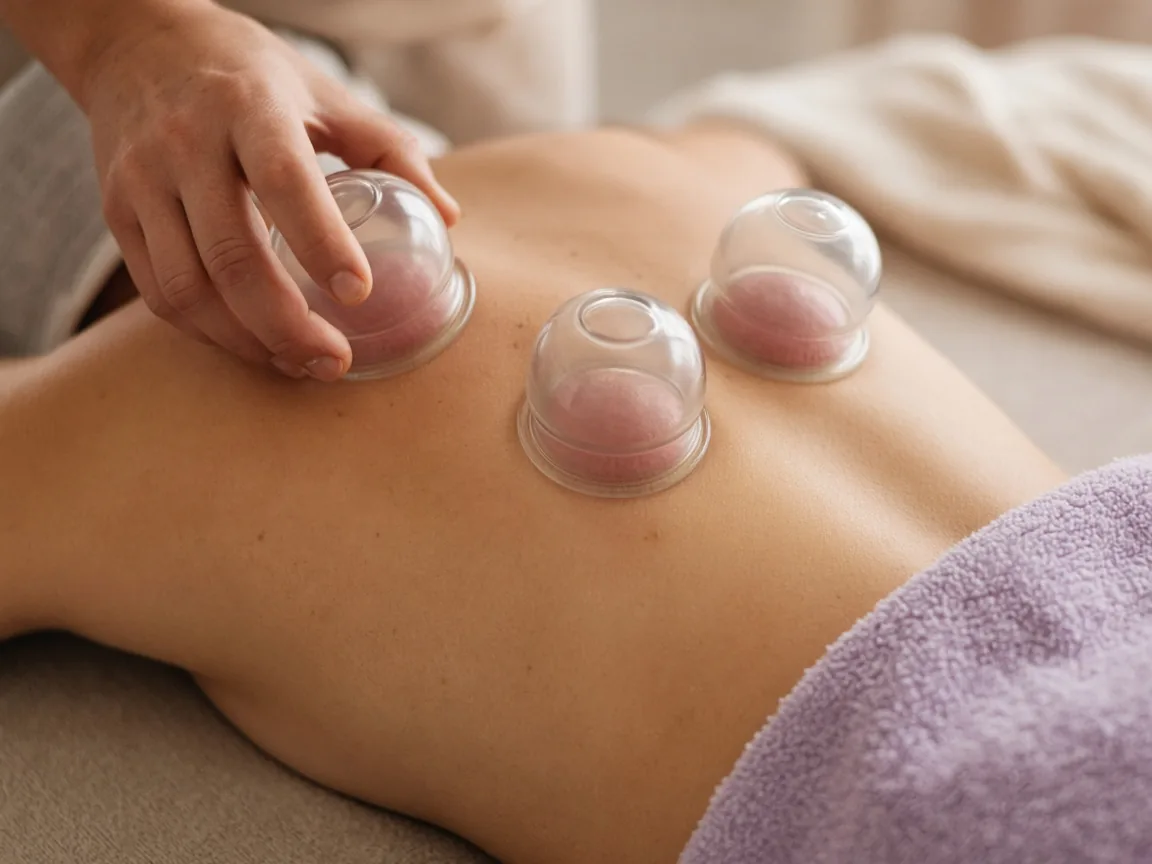
Osteopaths may use dry cupping to:
- Support circulation — the suction draws blood to the area, which may increase the delivery of oxygen and nutrients and support healing.
- Release muscle tension and fascia — the lifting effect can stretch muscle fibres and the fascia around them, and may help with deeper tension or adhesions that are harder to reach with hands-on techniques alone.
- Help joint mobility — releasing tightness in the muscles and fascia around a joint may improve its range of movement.
- Help with pain — cupping may help ease pain, including some back and neck pain, by improving blood flow and reducing muscle tension. It may also influence how the nervous system processes pain.
Different techniques
We may use dry cupping in different ways:
- Static cupping — cups are placed on specific points and left in place for a short time, typically a few minutes.
- Moving or gliding cupping — oil or lotion is applied so the cups can be moved along a muscle group, combining cupping with a massage-like action.
- Functional cupping — movement and stretching while the cups are in place, which may help fascial release and joint mobility.
Important considerations
It is common for cupping to leave temporary, circular marks on the skin that can look like bruises. These are caused by the suction and typically fade over a few days to a couple of weeks.
Cupping is not suitable for everyone. We will assess you first, especially if you have certain skin conditions or a bleeding disorder, or if you are pregnant.
Price
This is offered, where appropriate, as part of your Osteopathy appointment rather than as a separate session. An initial consultation is 45 minutes and costs £70. Follow-up appointments are £70 for 45 minutes or £60 for 30 minutes. See pricing and insurance.